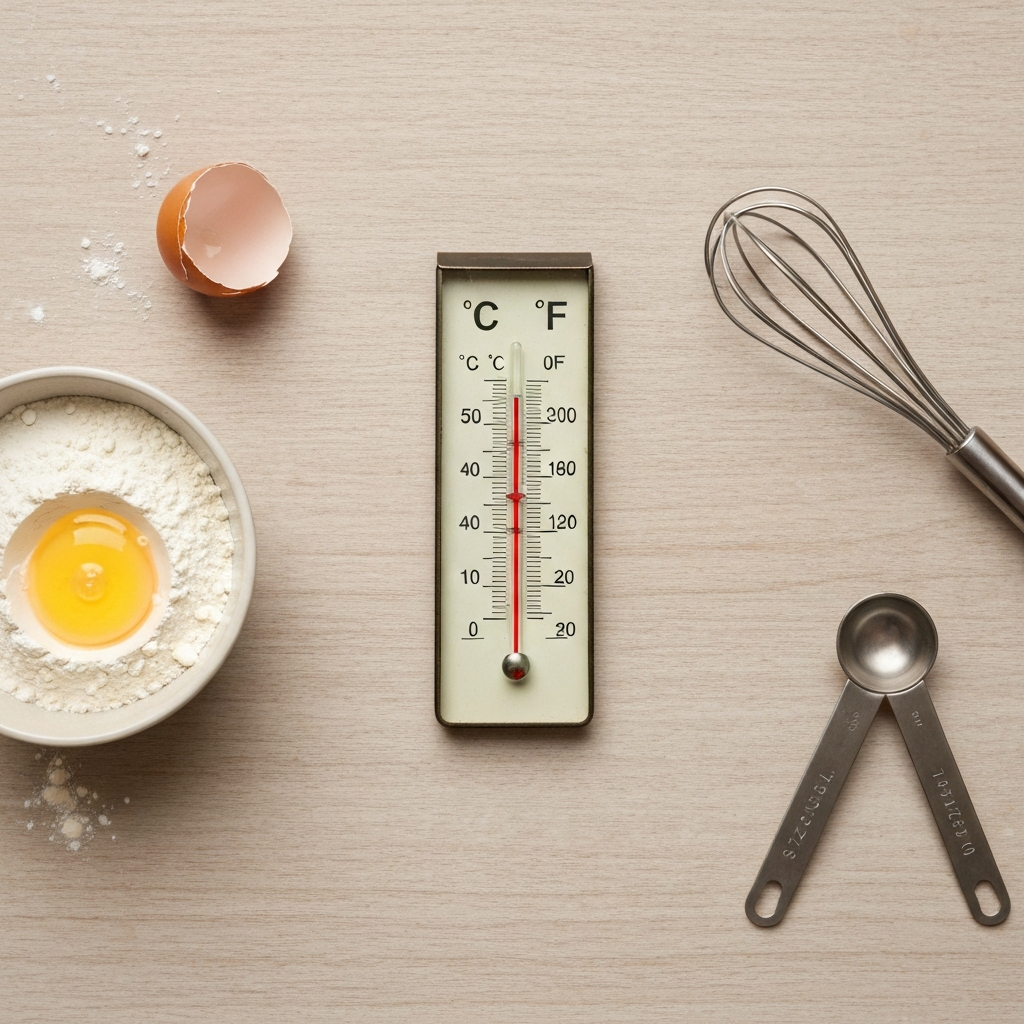
Did you know that water freezes at 0 degrees Celsius but 32 degrees Fahrenheit? This difference highlights why understanding temperature conversions is so important, especially when following recipes or interpreting weather reports from different regions. The formula to convert Celsius to Fahrenheit might seem a bit tricky at first, but with a clear, step-by-step approach, it becomes quite manageable. This guide will break down the process, making it easy for anyone to master.
The Core Formula Explained
The fundamental formula for converting degrees Celsius (°C) to degrees Fahrenheit (°F) is:
°F = (°C × 9/5) + 32
Let’s dissect this formula. You first need to multiply the Celsius temperature by 9/5 (or 1.8). This accounts for the different scales each system uses. Fahrenheit has a wider range between the freezing and boiling points of water compared to Celsius. After the multiplication, you then add 32. This addition is crucial because the freezing point of water is 0°C but 32°F.
Step-by-Step Conversion Process
To make this conversion practical, let’s walk through the steps with an example. Suppose you have a recipe that calls for a temperature of 190°C, and your oven only displays Fahrenheit.
Step 1: Multiply by 9/5 (or 1.8)
Take your temperature in Celsius and multiply it by 9/5. Using 190°C as our example:
190 × 9/5 = 190 × 1.8
You can perform this multiplication in a couple of ways. You could multiply 190 by 9 and then divide by 5, or you can use the decimal equivalent, 1.8, which is often simpler for calculations.
190 × 1.8 = 342
So, after the first step, 190°C is equal to 342 on a scale that is 9/5 times larger.
Step 2: Add 32
Now, take the result from Step 1 and add 32 to it. This adjusts for the difference in the freezing point of water between the two scales.
342 + 32 = 374
Therefore, 190°C is equal to 374°F.
This means that if a recipe calls for 190°C, you would set your oven to 374°F. For more detailed explanations and examples, you can explore resources like Wikipedia’s page on temperature conversion. Understanding this conversion is also helpful when dealing with everyday measurements, such as checking the 190 c to f.
Why Understanding Conversions Matters
Temperature scales are used globally, and understanding how to convert between them is a practical skill. Whether you’re a traveler navigating a new country, a student learning about science, or a home cook trying out international recipes, knowing these conversions can prevent confusion and ensure accuracy. For instance, knowing that a hot summer day in many parts of the world might be 30°C, which is a warm 86°F, provides a better sense of the actual conditions. For a deeper dive into the history and science behind temperature measurement, resources from National Institute of Standards and Technology (NIST) can be very informative.
Frequently Asked Questions
How do I convert Fahrenheit to Celsius?
To convert Fahrenheit to Celsius, you reverse the process. First, subtract 32 from the Fahrenheit temperature, and then multiply the result by 5/9 (or approximately 0.555). The formula is: °C = (°F – 32) × 5/9.
What is the boiling point of water in both scales?
Water boils at 100°C and 212°F. Notice how the difference between freezing and boiling is 100 degrees in Celsius (100 – 0) and 180 degrees in Fahrenheit (212 – 32). This 100:180 ratio simplifies to 5:9, which is why the 9/5 multiplier appears in the conversion formula.
Is there an easier way to estimate the conversion?
For a rough estimate, you can sometimes double the Celsius temperature and add 30. For example, 10°C is roughly (10 * 2) + 30 = 50°F. The actual conversion is 50°F. This approximation works best for moderate temperatures. For precise conversions, always use the formula.
Conclusion
Mastering the conversion from Celsius to Fahrenheit, and vice versa, is a valuable skill. By following the simple two-step process of multiplying by 9/5 and adding 32, you can confidently convert temperatures for any purpose, from baking to understanding global weather. This fundamental knowledge bridges different measurement systems, making information more accessible and practical in our interconnected world.